Free Ways to Improve Vagal Tone (That Actually Have Evidence)

Before you spend a cent on a device, spend a month on these. The techniques with the best evidence for raising vagal tone are the ones that cost nothing. Here they are, ranked honestly by how strong the science is.
1. Slow Breathing (Best Evidence, Do This One)
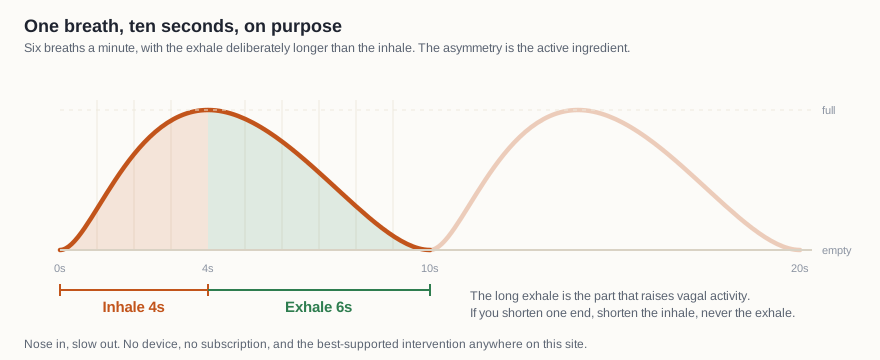
This is the single most reliable way to raise vagally mediated heart rate variability, and it works within minutes. The research consistently shows that breathing at around six breaths per minute, with a longer exhale than inhale, increases vagal activity measured through HRV.
The pattern: Inhale gently through the nose for 4 seconds. Exhale slowly for 6 seconds. That is one breath every 10 seconds, or six per minute.
How long: 5 to 10 minutes. Once a day is enough to start.
Why the long exhale: Your vagus nerve slows your heart on the exhale. Making the out-breath longer than the in-breath leans on that mechanism directly.
When: Morning to set a calm baseline, or any time you feel a stress spike coming.
Do not overthink the exact seconds. A 4-in, 6-out or 5-in, 5-out rhythm both land near six breaths per minute. Slow, smooth, and nasal beats forced and deep. If you get lightheaded, you are breathing too hard. Ease off.
2. Cold Exposure (Good Evidence, Real Rules)
Cold water on the face triggers the mammalian diving reflex, and the vagus nerve drives that reflex to slow your heart. Splashing cold water on your face, a cold shower, or a cold plunge are all real vagal stimuli. Cold is also a fast circuit-breaker for a panic or stress spike.
The catch is that cold has actual safety rules, and the "colder is better" crowd is wrong. There is a correct dose. We do not repeat the whole thing here because our sister site already does it properly: the cold plunge protocol covers temperature, time, frequency, and who should not do it.
The simplest safe version, no tub needed: end your shower with 30 to 60 seconds of cold water, and breathe slow and long through the gasp instead of fighting it. That pairs cold with method number one.
3. Humming, Chanting, and Long Vocal Exhales (Thinner Evidence, Still Worth It)
The vagus nerve connects to the muscles of your larynx and throat. Humming, chanting "om," gargling vigorously, and long slow singing all combine a controlled exhale with vibration in that region. Small studies suggest these can nudge vagal activity, but the evidence is weaker and shakier than for plain slow breathing.
Be honest with yourself about this one: it is a pleasant add-on, not a headline treatment. The most likely reason it helps is that it forces a slow exhale, which is method number one wearing a costume. Hum on your exhales during your breathing practice and you get both at once.
What About the Other "Vagus Hacks"?
The internet lists dozens: ear massage, foot reflexology, specific yoga poses, probiotics, ice packs on the chest. Most range from weak evidence to none. Some, like general exercise, good sleep, and social connection, genuinely support autonomic health, but through many pathways, not a magic vagus switch. Do not let a long list of hacks distract you from the two things that actually move the needle: slow breathing and cold.
A Simple Weekly Routine
Daily: 5 to 10 minutes of six-breaths-per-minute breathing. Morning is ideal.
3 to 4 times per week: a cold finish to your shower, 30 to 60 seconds, breathing slow.
Optional: hum or chant on your exhales during the breathing session.
Track it: check your morning HRV trend over weeks, not days. See the HRV page.
Only After a Month, Consider a Device
If you have done the free work honestly and want to experiment further, that is a fair next step. Just go in knowing the consumer devices have far thinner evidence than the breathing you just learned. The honest device guide is here, and the safety page lists who should not use electrical stimulators at all.